
The History of the American Breakfast
A lot of what we think of as a "classic" American breakfast is younger — and more manufactured — than it feels.
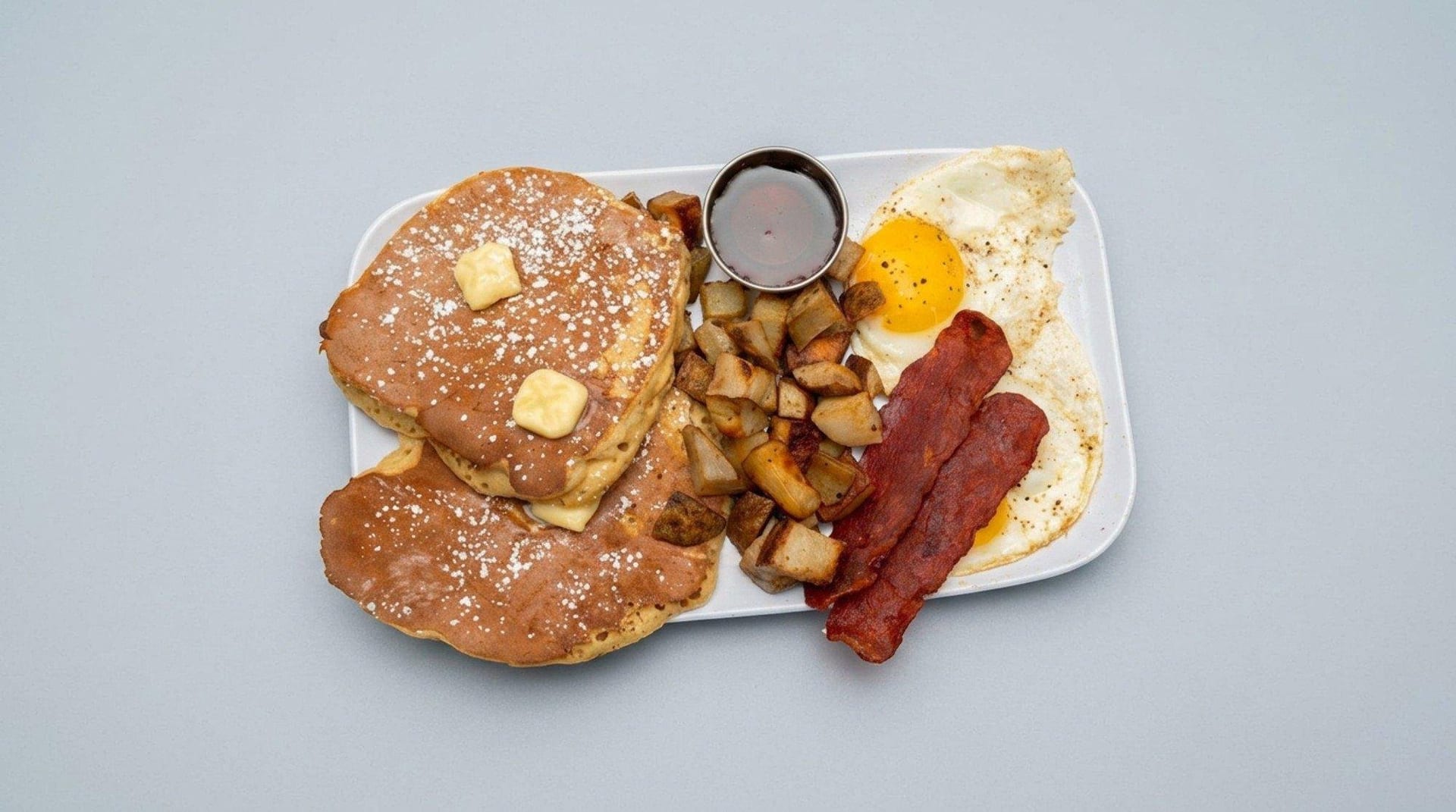
Eggs have been a breakfast staple for a long time, largely because fresh eggs were simply available first thing in the morning. Their now-famous pairing with bacon, though, is a 20th-century invention. In the 1920s, most Americans ate light breakfasts — coffee, maybe toast. A public relations campaign for the bacon industry changed that, enlisting doctors to publicly recommend a "hearty breakfast" of bacon and eggs. It worked, and the pairing stuck for a century.
Cereal has a similar backstory. It didn't exist before the 19th century, and it also started out as a doctor-recommended health food. By the 1910s, companies were rolling out puffed wheat and rice cereals, and by the mid-20th century, mascots and sugar had turned cereal into the default breakfast for American kids.
It's a good reminder that "traditional" breakfast is often just whatever a good ad campaign made popular a hundred years ago. We like to think our own menu splits the difference — familiar plates like French toast and eggs, alongside a Turkish breakfast table that never needed a marketing campaign to become a tradition.
Ready to taste Mumu's favorites in Troy, NY?
Freshly prepared Turkish breakfast plates, hot pressed panini, and artisan coffee. Order online for rapid store pickup or local delivery across the Capital Region.
More from Food Culture
Comments
Be the first to leave a comment.